Your affiliate links aren’t getting clicked on for a simple reason: you’re not using the right “level of promotion.”
On one hand, we see affiliates who BARELY mention that they have a tracking link at all and just hope people will magically click it…. That’s UNDER-promoting.
And on the other hand, we see affiliates go WAY too far and turn everything they publish into a hard sales pitch… that’s OVER-promoting.
And the brutal truth is, both of these extremes KILL clicks!
The fix is to match HOW you promote links to the amount of trust – and buying intent – your audience has in that moment.
I call this framework the Three Levels of Affiliate Promotion – the mention, the pre-sell, and the endorsement – and applying these affiliate CTAs to your funnel will change everything!
Let’s dive in!
Affiliate CTAs: The Three Levels of Promotion
One of the fundamental problems affiliates face is promoting at “the right level” in their campaigns.
For example, if you have a customer who’s ready to buy now, you don’t want to just drop a link with no context – that’s probably not strong enough to maximize your chances at the affiliate sale.
But if you have a customer who’s just now hearing about the solution and they’re a little curious, screaming at them to BUY NOW will scare them off!
So, think of the levels of promotion as varying amounts of “persuasion firepower” that you choose at the right moment to move your customers toward the sale: from the mention to the pre-sell to the endorsement.
Level 1: The Mention
The first level of promotion is the mention. It’s like, “Here’s a relevant option you can consider.”
You may briefly touch on a pain point, solution, or product in your content or landing page. Your tracking link will appear as an in-text link or banner image, but it’ll be subtle without a lot of hype or fanfare drawing attention to it.
This is perfect for brief product mentions in helpful content like blog posts, where you want to insert affiliate tracking links where they naturally fit with the existing content, or maybe as a postscript in a promotional email.
For example, in an advertorial about energy cost savings, you might subtly promote ClickBank’s “Energy Revolution System” product with a brief link like, “you can save big on your energy bills.”
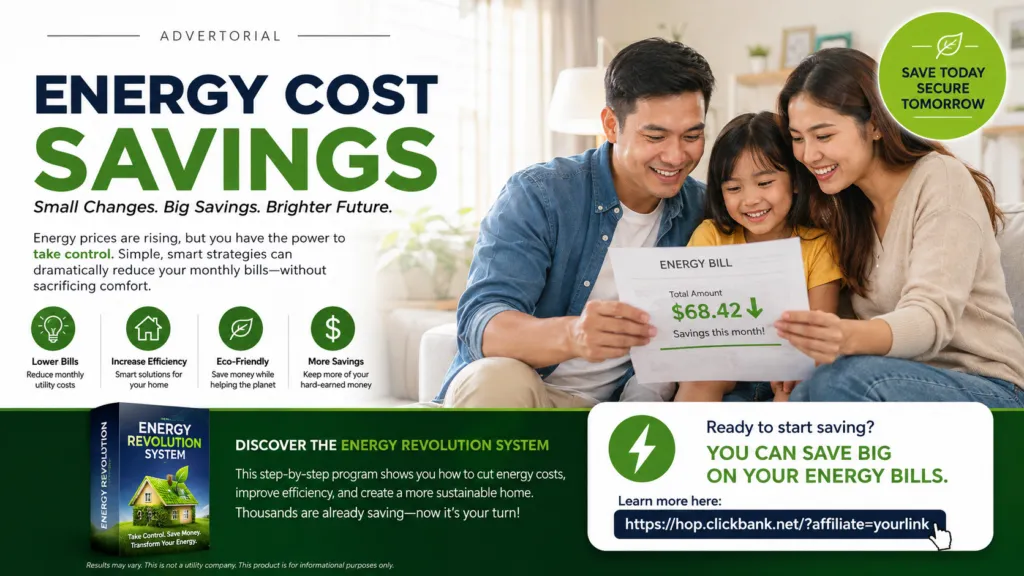
You don’t dwell on it, you don’t provide much context, but you give people who are curious an opportunity to click through and learn more about the solution you’re promoting.
Or maybe in a how-to video on YouTube, you can drop a mention of some piece of gear in the description for viewers to go check out.
Technically, a mention can still generate clicks and sales – especially when the product you’re recommending is relevant to the topic of your content or page. But with less context and urgency to act, mentions usually don’t convert as well as a higher level of promotion, such as the pre-sell.
Level 2: The Pre-sell
This second level is the pre-sell. It’s like, “Here’s why this solution may be worth a closer look.”
With a pre-sell level of promotion, you’ll actually tee up a specific solution that’s directly tied to your content or landing page. This can happen through a verbal call to action, an in-text link, a banner, a callout, or a button that gives people a strong reason to click.
Going back to our Energy Revolution System example, the simple Level 1 mention might say:
“You can save big on your energy bills.”
But a Level 2 “pre-sell” might say:
“If your energy bills keep climbing, the Energy Revolution System can give you an alternative solution with thousands of dollars in potential savings. Click below to learn more!”
See the difference?
At Level 1, you gave people a simple option. At Level 2, you gave them a reason to believe that this solution is relevant to their specific problem.
This pre-sell approach is often the sweet spot for helpful, educational content – because you can provide real value upfront while still giving your audience a compelling reason to click through and learn more.
But there’s one more level… and THIS is where affiliates sometimes make a costly mistake…
Level 3: The Endorsement
This third level of promotion is the endorsement. It’s like, “Here’s why I recommend this SPECIFIC product to you!”
At this level, the product itself is the main focus of the content or page.
Now, there’s an interesting wrinkle here: in the direct response space where ClickBank lives, it’s not usually the affiliate’s job to “endorse.”
What do I mean?
Well, the seller has a pitch page, often featuring a video sales letter (VSL), that’s totally focused on closing the sale.
So in most cases, an affiliate’s just “selling the click” over to that sales page so the seller can take it from there and convert the lead into a buyer.
So for our Energy Revolution System example, IF you were to create an “endorsement”-level asset, it’s going to be an advertorial, an energy saver’s buying guide blog post, a promo email, or maybe a YouTube product review of the Energy Revolution System…
At this level, you’re going ALL IN on convincing your audience to click through, which means you’re featuring your tracking link all throughout your content or page!
The endorsement is a great way to encourage clicks, but only when your audience is warmed up enough to be receptive to it. And in many cases, they aren’t there yet.
That’s why, depending on your funnel, you could make the case that the Energy Revolution System’s sales page IS the endorsement!
Example 1: At the Movies
I thought it would be helpful to illustrate an example of these levels of promotion that’s NOT about business.
So, imagine you recently watched a movie you loved, and a friend asks what you’ve been up to.
At the first level, you might casually say, “Oh, well, I saw this movie… It was pretty good.” Your friend is now aware of the movie, but you didn’t give them a strong reason to check it out.
That’s a mention.
At the second level, you might say, “Oh, I saw this great movie! First of all, Matt Damon has crazy abs…” And you go on to share a few more reasons why you liked it so much.
That’s a pre-sell, or a middle-of-the-road promotion. You’ve added some color and context to this movie recommendation, so there’s a better chance it’ll stick with your friend and influence their decision to watch it themselves.
At the third level, you proactively text your friend: “Oh my God, have you heard about this movie I just saw? I know you love adventure movies like this – here’s why it’s PERFECT for you!”
That’s an endorsement. You’re not just making them aware of the movie – you’re actively encouraging them to go watch it too. So of course, that would influence them a lot more than the first two examples.
You can see a pretty significant ratcheting up of the intensity from one level to the next – and that’s why a basic mention or even a pre-sell doesn’t always break through and lead to a sale right away.
But at the same time, approaching your audience with that Level 3 “endorsement” intensity can sometimes feel like shouting at someone who’s just expecting a whisper.
So, to recap so far:
- Level 1 is a mention: “Here’s a relevant option you can consider.”
- Level 2 is a pre-sell: “Here’s why this general solution may help you.”
- Level 3 is an endorsement: “Here’s why you should go check out this specific product.”
How do you know when to use each one?
I’d start by asking the following question:
“What does my ideal customer for this campaign already know, what do they want right now, and how much context do they need before they’re ready to click?”
Now, in a perfect world, you’d always promote a product with enough built-in demand that you could jump straight to the endorsement and capture the sale right away – but there are times when you need a lighter touch before you can make that strong ask.
Let me show you how to do that!
Matching Affiliate Promotion to Buyer Intent
So, if these levels of promotion seem familiar, it’s because they map to a typical affiliate customer journey:
Awareness stage → Consideration stage → Decision stage
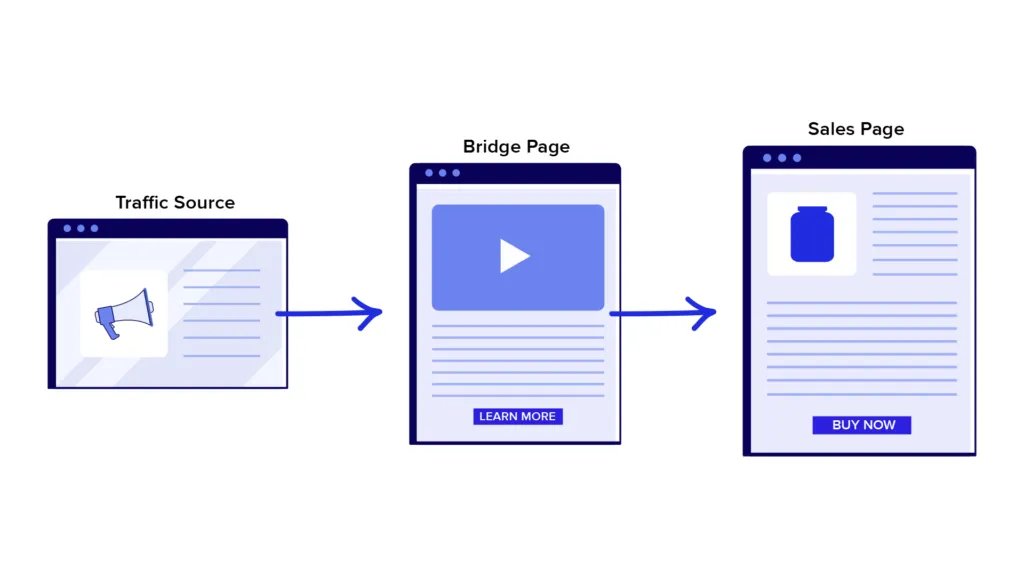
- Awareness: “I’m learning about a problem I have.”
- Consideration: “I understand the problem. What solutions can I find?”
- Decision: “I’m looking for a specific product or service to solve this problem.”
Let’s think about it from a customer’s POV.
Someone who’s casually scrolling on Instagram is in a totally different headspace from someone who’s searched for a product review on YouTube.
For our energy offer example, one Instagram post could be a high-level, top-of-funnel post addressing the pain point of high energy costs, like: “POV: You want to fill up your gas tank” and it’s a video of someone exaggeratedly crying while withdrawing a giant stack of bills from the ATM.
Another more bottom-of-funnel post on the same account might reveal a specific aspect of the Energy Revolution System to tease the actual product, like: “This power generator can boost any electricity source into 7 times more power than conventional sources.”
Someone watching a broad “how to lower your energy bill” video probably needs useful information first…
But someone searching for “Energy Revolution System review” is already much closer to a buying decision.
The mistake is assuming that every audience needs the same kind of affiliate promotion at the same time.
They don’t.
Your promotion should become more specific and more direct as the audience’s intent increases.
So…
- Awareness → Mention
- Consideration → Pre-sell
- Decision → Endorsement
But there isn’t just one rigid rule where content on Instagram always equals a mention and a blog post on your website always equals an endorsement.
The platform is only one factor.
The real question is what your audience expects from the content and how close they are to choosing a solution.
And like I mentioned earlier, there’s an important caveat when it comes to ClickBank-specific offers.
Many of our affiliate offers – from dietary supplements to digital programs – are actually SOLD on the seller’s side. In other words, affiliates aren’t usually responsible for that decision stage.
The Energy Revolution System has a well-produced, in-depth video sales letter that does most of the work in actually “selling” the product. As an affiliate, our job is just to drive qualified leads over to that page and let their high-converting VSL take it from there.
But what’s cool is that you can create different content and paid assets for these different levels of intent and string them together in a flow that will reach audiences, warm them up, capture them, and drive them to the sale.
Affiliate Blog CTA Example
I have experience dealing with these levels of promotion in my own affiliate blog, Improve Songwriting.
I’ve gotten sales on a ClickBank digital music offer through my blog, and I can show you examples of the different levels of promotion right here.
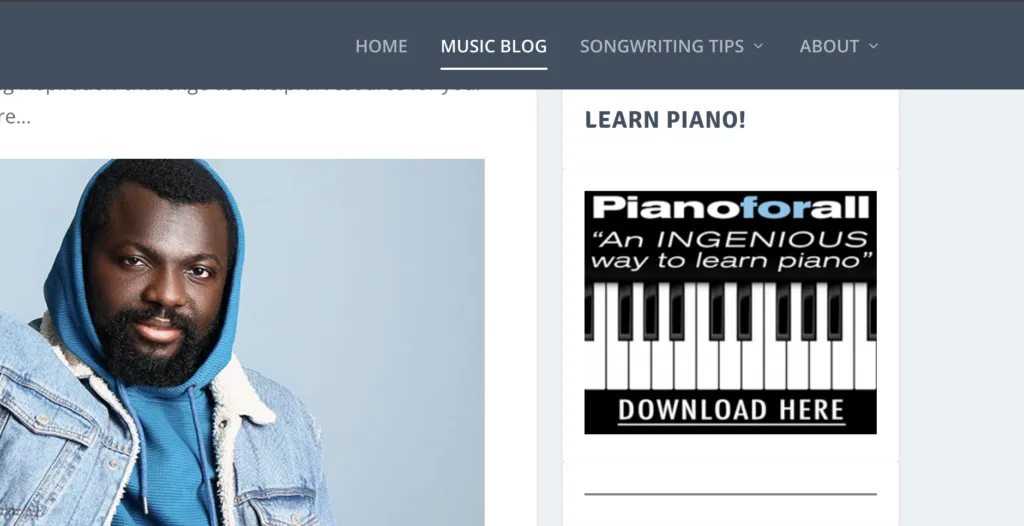
So, I have these banner images on the sidebar of my website.
These are very much just “mentions” – there’s technically a chance for them to generate some traffic, but it’s REALLY uncommon for me to get a sale from these.
Then, I have a popup that comes halfway through the page. This is more like a pre-sell, because it talks about the solution a bit, but there’s not a lot of room to really warm up the audience there.
Lastly, I have some callouts on the page itself, and I’d say these are at the pre-sell level of promotion.

Now, I don’t currently have any Level 3 Endorsement pages or pieces of content.
In my case, if I wanted to do an endorsement level of content, I’d definitely write up a product review of Piano 4 All.
I’d probably do a guide or two that talks about the best ways to learn piano as a songwriter and include Piano 4 All in the list. Comparisons between Piano 4 All and competing solutions would also work here.
And I might do a separate breakdown or case study of my experience with the product… Something like, “I Practiced With Piano 4 All for 30 Days. Here’s What Happened.”
Check out my guide on different types of affiliate marketing content to create with these affiliate CTAs, if you want more inspiration.
But with that said, the most important takeaway is that there’s a place for ALL THREE of these levels of promotion in your organic content!
Mentions will boost your audience’s familiarity with a solution, so by the time you pre-sell or endorse the product, they’re more warmed up to it.
Or say you have a brief mention or pre-sell of your chosen affiliate product in an article. You could also have a dedicated advertorial at the endorsement level to point people to, if it’ll help warm them up and boost conversions through your tracking link.
Hopefully, this real-world example gets some wheels turning about how to incorporate all of these levels of promotion into the affiliate marketing funnel!
But understanding the three levels is just HALF the battle… the other half is knowing how the same promotion changes when your traffic comes from Facebook, YouTube, native ads, email, or a blog post…
Affiliate Promotion Tips by Traffic Source
I’ve specifically avoided making this article just about landing pages or a single traffic source, because the honest truth is, your tracking link can be placed in any of these places and convert SUPER well – or not at all!
Getting the click on your tracking link is a customer psychology challenge, plain and simple. That’s why it’s important to zoom out and look at the customer journey as a whole.
My general rule of thumb is to think in terms of “the next step” at all times. What’s the ONE action your audience can take next that will move them closer to a purchase?
In my time at ClickBank, I’ve analyzed actual landing pages from up-and-coming affiliates and shared my feedback with them.
These are some of the issues that I see over and over:
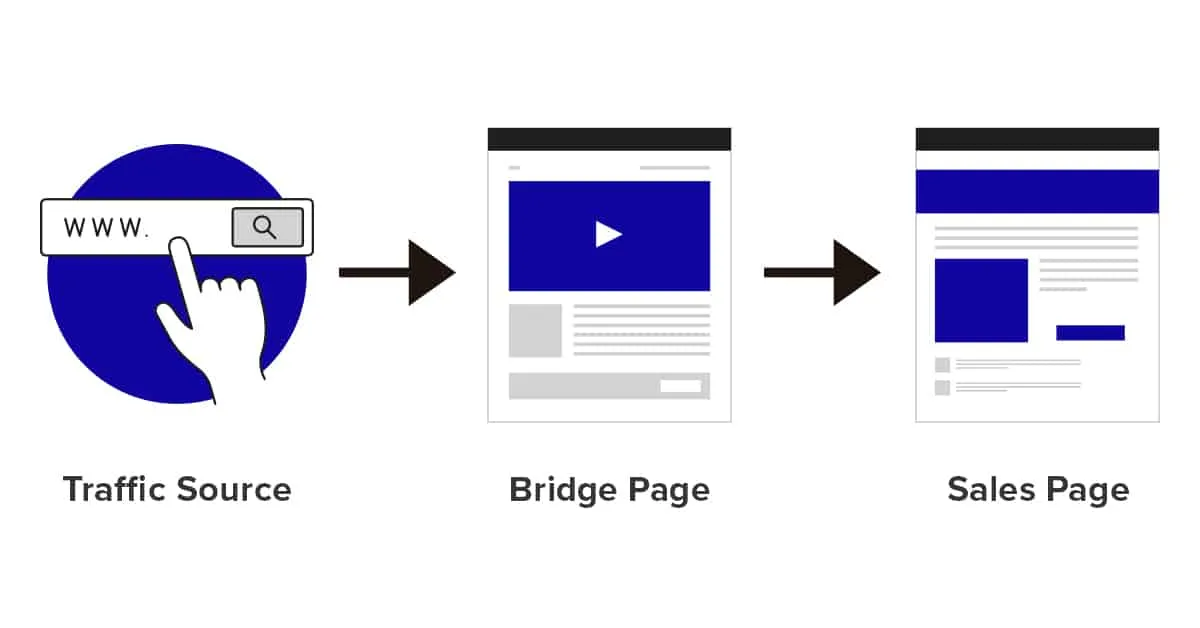
- Affiliates will list out several different affiliate products and links out to each one – essentially, a series of “mentions” featured on the same page. Whether that’s a link in bio page, a bridge page, or a blog post, if you give your audience too many choices, they won’t choose any of them.
- Affiliates will try to sell the product before their audience is even aware of it, rather than just “selling the click” over to the pitch page. Many ClickBank offers are designed for the seller to handle Level 3 promotion through their text or video sales letter, so it’s redundant and often detrimental to sell an audience on the product too soon.
- Affiliates don’t use “curiosity” to encourage the click. Every stage of the affiliate funnel is a step toward the sale, and there’s an art to sharing enough information about the solution to be intriguing, but not so much that the lead has no reason to keep progressing through the funnel.
Now, with that said, let’s make it practical.
Here are some general rules of thumb for you across the five biggest traffic channels for affiliate marketing:
1) Paid social
On paid social platforms like Meta Ads or YouTube Ads, you’re usually dealing with a cold audience. They didn’t wake up this morning looking for your offer – or even a solution to the pain point it addresses. They’re just scrolling their feed.
So with this audience, I would start with a pain point, surprising insight, or some kind of curiosity-driven content. Then, use a pre-sell level of promotion on your affiliate bridge page to warm them up for the next click on your tracking link.
Example: For Energy Revolution System, your ad creative could be something like, “Most people don’t realize how much of their monthly budget disappears because of energy costs. I’m so glad I found an alternative approach…”
For more ideas, it can be helpful to reverse-engineer winning ads on the same topic through an ad spy tool or Meta’s Ad Library.
2) Organic social
Organic social platforms like Facebook, Instagram, and TikTok are similar to paid, but the big advantage here is that you can build up a relationship with your audience over time.
This makes it possible to create content down-funnel, which means you can probably create some pre-sell or even endorsement level promotional content and drive traffic to your tracking link through an automated DM funnel or your link-in-bio.
Example: For social media, you can create image posts, carousels, and short videos. Like with paid social, it’s a good exercise to find other content in the same niche and see what’s getting engagement. That helps you start with a solid foundation that you can put your spin on. You don’t want to overdo it on the promotion and selling with organic social, but there’s room to add a soft CTA in most of your posts.
You may try creating original content around the cost of electricity (citing real statistics), which aggravates the key pain point of a power bill that’s too high… Maybe an intro hook like, “You’re not just imagining it – electricity costs are skyrocketing” while showing the graphic of a chart going up and to the right, like this one I found that shows prices went from about 13 cents per kWh in 2021 to 16 cents per kWh in 2023.
3) Native ads
Native ad platforms like NewsBreak, Outbrain, and Taboola give you a way to reach audiences on major websites and online publications. The goal with native ads is to draw the click with curiosity, then deliver a landing page that continues the same story that the ad began, ideally with a package that matches the article or video format the lead was consuming.
I’d lean mostly on the pre-sell side for native ads, because you’re starting with someone in info gathering mode, but not necessarily a buying mode. They’ll need a lot of warming up to bridge the gap from passive consuming to active purchasing.
Example: Promoting the Energy Revolution System on native ads, you can definitely use the seller’s banner images as inspiration. Things like “more and more are turning to this alternative method to produce their own energy,” paired with an unfamiliar-looking contraption, potentially with some arrows or circles to draw the eye. All of this hints at some useful information for anyone who clicks on the ad.
4) Blog posts
I would think of blog posts as a cluster of topics, each focused on a different level of promotion. Some are very top of funnel info topics where brief mentions make sense.
Others are middle of funnel covering keywords and search queries related to your product at the solution level.
Lastly, you may want to create some bottom of funnel, endorsement-level topics where the product is the whole topic.
Example: For the Energy Revolution System example, you might do “how to save on energy costs” at a high level, something like “power generator tips” for the middle of funnel, and something like “best alternative energy sources” or even “energy revolution system review” for bottom of funnel.
5) Email
With email marketing, the mention would just be a simple banner, callout, or postscript where you drop a link to the offer or your landing page.
A pre-sell level would be a whole chunk of an email devoted to the offer, or maybe the entire email.
On the endorsement level, you could even create an entire email series or sequence that promotes your chosen affiliate product, the same way you would with your own offer.
Example: To do email marketing for the Energy Revolution System, it depends on what kind of list you’re building – but the product could appeal to a survival/DIY audience, an audience interested in alternative energy, or even a more general audience who wants to save money on their energy bills.
Since the seller actually has swipe files for email, I’d lean on those as a starting point for email – maybe a subject line like “Ditch Your Electric Company for Less Than $98.”
The Relevance Test
I want to leave you with one more tactical step you can use to ensure your campaign is fully optimized for the right level of promotion.
I call this the Relevance Test, and it’s just three simple questions:
1) Is the offer directly connected to what I’m talking about?
If someone clicked because they wanted help with a specific problem or pain point, would this offer feel like a reasonable next step – or would it feel random?
2) Have I given them a reason to click?
Don’t just include a link. Tell people what they’ll find on the other side and why it may be useful.
3) Am I asking for the right amount of commitment?
If the audience is cold and unfamiliar with the solution, a brief mention or pre-sell may be more appropriate. If they’re actively researching the product, a detailed endorsement could be exactly what they need.
If the answer to all three questions is yes, you’re probably at the right level of promotion.
If not, you can adjust your funnel until the answer is yes.
In our Energy Revolution System example, I can create a landing page for affiliate marketing that drives home a relevant pain point – paying too much for energy at the gas pump and electricity at home.
This aligns with the hook on the sales page, so it passes question #1. It also gives them a compelling reason to click (saving on energy costs), which passes question #2.
The last question depends on where I’m driving traffic from to this landing page. If it’s native ads, for example, you’re leaning heavily on curiosity and should probably stick with a pre-sell level of promotion.
If you’ve got an audience who’s actively searching for a relevant keyword and your page is a blog post, then a full endorsement may make sense.
Or maybe you’re sending an email out to your audience and just lightly mentioning this product in the postscript.
In the end, the page needs to nail the proper amount of commitment to get a click. That’s it!
Easier said than done, maybe, but that’s the game of affiliate marketing in a nutshell.
Affiliate CTAs Wrap-up
To succeed with affiliate marketing, it’s important to use the right level of promotion at the right time:
- A mention makes people aware of a relevant option.
- A pre-sell explains why a specific solution may help with the problem they’re facing.
- An endorsement helps someone evaluate and choose a specific product.
And for most affiliate promotions, the sweet spot is going to be that “pre-sell” level… Teeing up a solution and letting the offer owner take it from there and actually sell their product on the pitch page.
If this is all a little confusing, don’t worry – we’ve built out an entire curriculum called Spark by ClickBank that walks you through how to generate traffic and grow your affiliate business through free or paid traffic. You’ll learn the core skills you need to start promoting offers and work toward your first affiliate sale!
(And yes, that was a Level 2 promotion – but for real, it’s great training, so if you’re wanting to level up your affiliate marketing skills, be sure to check out Spark!)
I hope you use these tips to level up your affiliate marketing promotions and pile up those commissions. Happy scaling!